+1 937 803 2459
 Make an Inquiry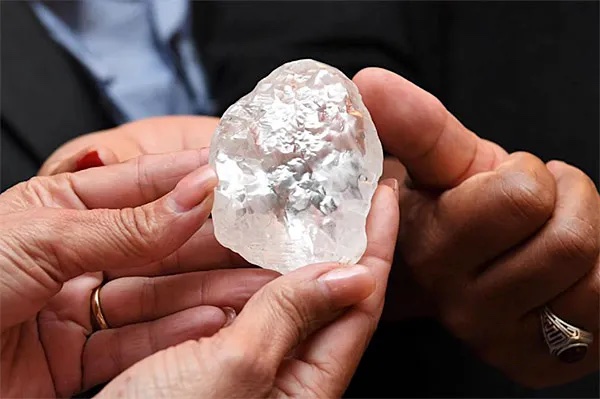
Diamond
The hardest natural material known, and the benchmark against which brilliance, fire and durability are measured.
Overview
Diamond is carbon crystallised in the cubic system under the extreme pressure and temperature of the Earth's mantle, typically 150 kilometres or more below the surface. Volcanic kimberlite and lamproite eruptions carried the crystals upward, where they are recovered today from primary pipes and alluvial deposits.
Its exceptional hardness, high refractive index and strong dispersion give a well-cut diamond its characteristic brilliance and fire. Trace nitrogen and boron, together with lattice defects, are responsible for the full range of diamond colours from near-colourless to yellow, blue, pink and green.
Our diamond programme documents growth features, strain patterns and inclusion suites, and maintains reference data for separating natural stones from laboratory-grown material produced by HPHT and CVD processes.